How Fernanda the Lone Tortoise Inspired a New Approach to Conservation Fundraising Ideas Through Art
- Ranjisha Raghavan
- Feb 14, 2025
- 4 min read
Updated: Jan 1
This blog is for:
✔ Conservation NGOs
✔ CSR teams
✔ Wildlife educators
✔ Fundraising leaders
✔ Biodiversity advocates
who are looking for new, emotionally powerful ways to mobilize people around urgent environmental causes.
Who Is Fernanda? The Story That Changed My Work Forever
For more than a century, the Fernandina Island tortoise was believed to be extinct.
No sightings. No tracks. No signs of life.
Until they found her.
One tortoise. Alive. Still. Alone.
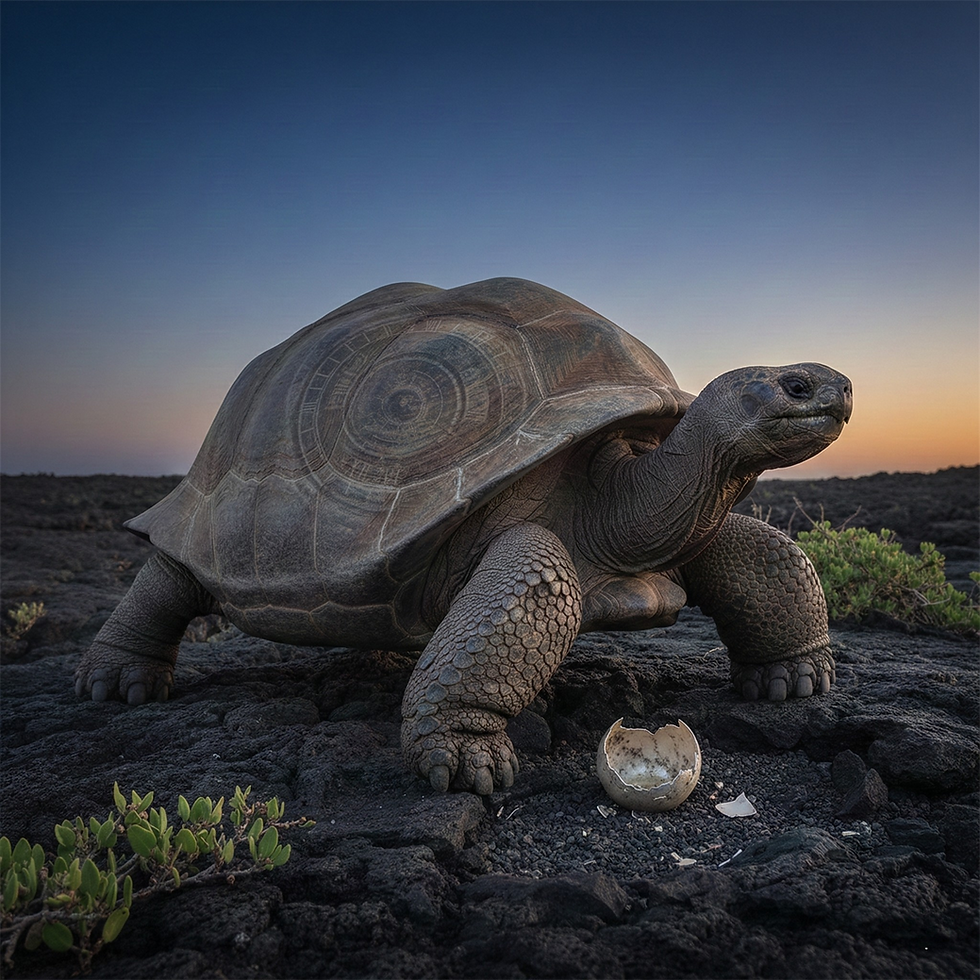
That moment stayed with me in ways I still cannot fully articulate. I read everything I could - her anatomy, her movement patterns, the volcanic island she calls home. I even explored virtual Galápagos tours just to understand the ecosystem she belonged to. The more I learned, the more I felt responsible. I had to paint her. Not as an icon - but as a life. A life carrying solitude, resilience, and a quiet plea for remembrance.
How an Artwork Became a Tool for Awareness and Conservation

When I began painting Fernanda, it wasn’t meant to be decorative. It was meant to speak.Her quiet gaze. A broken eggshell beside her. A clock on her back . A twilight sky closing in. Every element was intentional a visual metaphor for extinction, fragility, time, and the tiny window we still have to act. This painting became more than a canvas: It sparked conversations at gallery events and created emotional engagement that data alone could not. It became part of school awareness campaigns It was showcased at environmental talks It created emotional engagement that data alone could not That’s when I realized: Art is not just expression. Art can be strategy. A strategy for fundraising. A strategy for awareness. A strategy for conservation impact.
And that is where this blog becomes useful to you.
Why Art Works: Emotional Science Behind Conservation Fundraising Ideas
Conservation teams already know the challenge: People care until the next headline appears.Art solves that problem because it holds attention. Here’s why art is a powerful fundraising tool:
1. ART CREATES EMOTIONAL MEMORY
People forget facts. They don’t forget feelings.
2. ART HUMANIZES ENDANGERED SPECIES
A painting gives an animal a face, a story, a presence.
3. ART MAKES FUNDRAISING EXPERIENCES SHAREABLE
Campaigns that feature artworks have higher engagement and shareability.
4. ART GIVES DONORS SOMETHING TO HOLD
A story. A print. A plaque. A symbol of their contribution.
5. ART DRIVES HIGH-INTENT CONVERSATIONS
Collectors, patrons, CSR leaders they respond deeply to storytelling. This turns passive interest into active participation
Practical Ways Conservation Teams Can Use Art for Fundraising (With Fernanda as Proof)
If your organization is looking for meaningful conservation fundraising ideas, here are models that have already worked:
1. Awareness Exhibits + Donation Stations
Showcase artworks of endangered species with QR codes linked to:
• Verified conservation updates
• Adoption programs
• Donation portals
2. Limited-Edition Fundraising Prints
High-quality prints with certificates can raise funds quickly and sustainably.
3. Collaborative Campaigns (Art + Science + Story)
Use a painting as the anchor for a 30-day digital campaign that blends:
• Species facts
• Interviews with rangers
• Process videos
• Art storytelling
4. School & University Engagement Kits
Visual storytelling dramatically increases student engagement.
5. Exhibition Panels for Conferences
Art becomes the emotional entry point to hard conversations.
6. Collector-Backed Fundraising Auctions
Collectors love meaning. Art with a cause multiplies value. Fernanda’s painting has already been used in these formats and each time, it brought new supporters into the conservation circle.
Art as a Long-Term Conservation Partner, Not a One-Time Event
One thing I’ve learned is this: A painting doesn’t stop working once it’s sold. It continues speaking,- In a collector’s home- In a school corridor- In a gallery- In a CSR event- In a fundraising drive. For NGOs and conservation teams, this sustained visibility is priceless. Art keeps the cause alive long after the campaign ends.
Why I Keep Fernanda Close: A Personal Note from My Studio
Every corner of my home holds a story. Some paintings were created to be shared. But a few pieces stay with me -because they mirror who I’ve been, and who I’m becoming. Fernanda is one of them. She sits beside my Buddha piece, beside Symphony, beside the Girl in Red Frock - all anchors from my own chapters of resilience, transition, and rediscovery. She reminds me why I paint. Why these stories matter. And why collaboration with people like you NGOs, conservationists, wildlife educators is essential. Because art alone cannot save a species. But art partnered with action can.
If You’re Looking for Conservation Fundraising Ideas Start with a Story That Moves People

People don’t act because of information. They act because something moved them. If your organization is building a campaign, raising funds, or searching for new engagement ideas, art can be the emotional engine behind your impact. And if you’d like to explore how we can collaborate -for exhibitions, fundraising events, school programs, or species-specific campaigns -I would love to hear from you. Together, we can build stories that protect what still remains.


Comments