Why do marine conservation stories struggle to stay with people, even when the urgency is clear?
- Ranjisha Raghavan
- Dec 4, 2023
- 3 min read
If you work in marine conservation, you’ve probably seen this.
You share strong data.
Coral bleaching, plastic pollution, species decline.
People engage… for a moment.
But the story doesn’t stay.
It doesn’t come up again.
And it rarely turns into deeper support.
Not because the work isn’t important.
But because the species still feel far away.
I noticed this in myself first.
Even while studying endangered species every day,
marine life still felt distant to me.
And that made me wonder:
If I feel this distance, how does the public feel?
The real gap isn’t awareness. It’s what people remember

Marine conservation doesn’t lack information.
You’re already talking about:
Biodiversity loss
Bycatch
Habitat degradation
Ecosystem collapse
People understand it.
But they don’t hold onto it.
And that’s where things begin to slip.
Because if the story doesn’t stay:
Engagement fades
Connection weakens
And support becomes inconsistent
Where this became real for me - the Vaquita
This became very clear to me while working on a painting of the Vaquita.
One of the rarest marine mammals in the world.
With fewer than 20 individuals left.
When I first read that, it felt shocking.
But also… strangely distant.
And that was uncomfortable.
Because if something this critical can still feel distant,
then how do we expect others to stay connected to it?
What changed while creating that piece
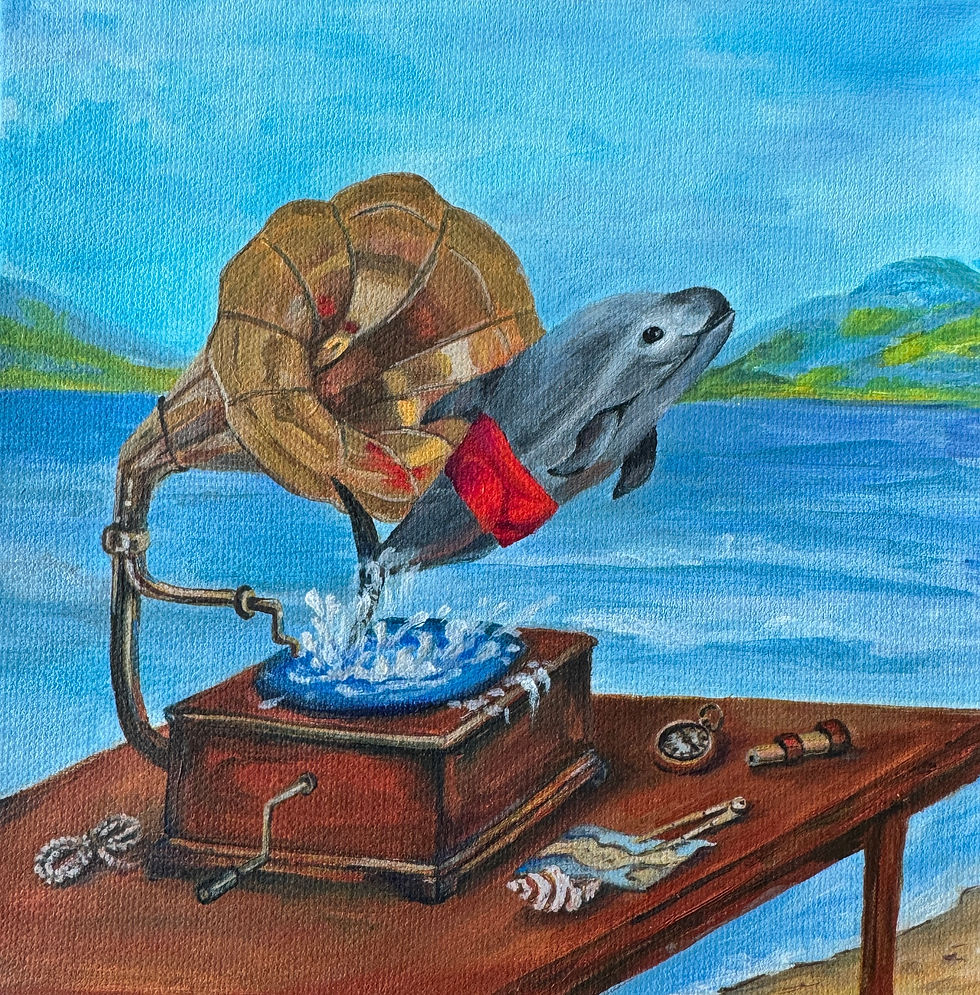
In the painting, the Vaquita is emerging from a gramophone.
Water is spilling out.
The sound feels interrupted.
As if something is trying to be heard…
but not reaching us in time.
That image stayed with me.
Because it felt very close to what I was seeing.
The message is there.
The urgency is real.
But it’s not always being received.
What I’ve noticed when people experience it
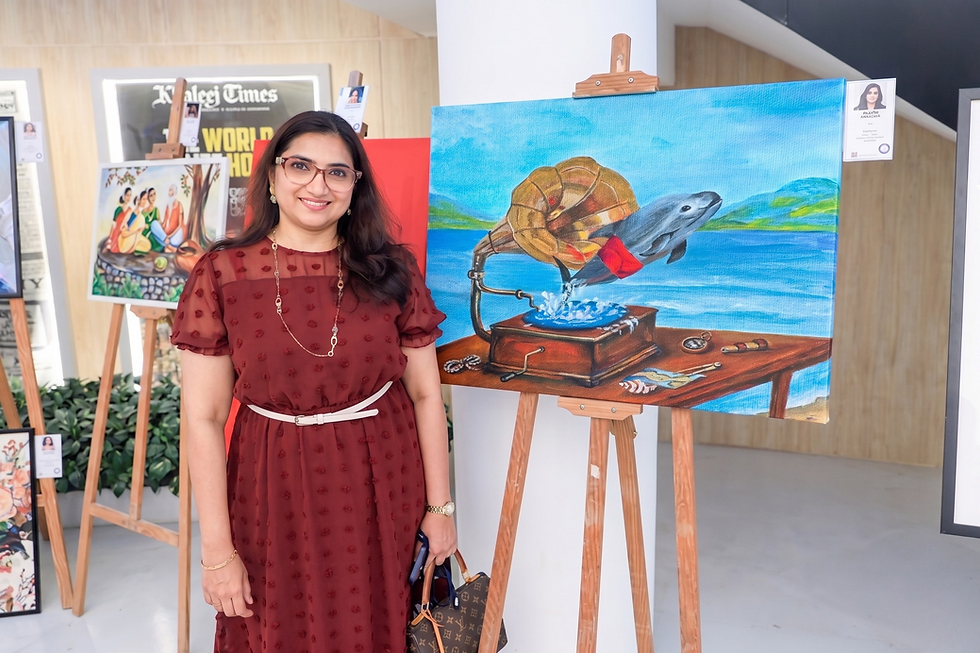
When this work has been shared in conversations or spaces,
people don’t begin with data.
They pause.
They ask:
“What is happening here?”
“Why is it coming out of that?”
And slowly, something shifts.
The species is no longer distant.
It becomes something they are trying to understand.
And more importantly,
they remember it later.
What this means for your work
In most marine campaigns,
people first see data… and then try to connect.
But what I’ve seen is this:
👉 When a visual comes first,
people stay long enough to understand what comes next.
Instead of:
Information → brief attention
It becomes:
Curiosity → connection → understanding → recall
And that shift changes how awareness builds.
How this can be used in your campaigns
This can be applied in very simple ways:
Start campaigns with a visual narrative of the species, before introducing statistics
Use artwork in donor presentations, so the species stays in memory after the meeting
Place visuals in exhibits or awareness spaces, where people engage before they read
Include them in reports or communication decks, so complex realities feel easier to grasp
The goal is not to replace your work.
👉 It is to make your work stay longer with people.
Why this matters for marine conservation
Marine life is harder to connect with.
It’s:
Unseen
Distant
Quiet in its decline
Which means your work needs stronger ways to stay in people’s minds.
Because people don’t support what they only understand.
They support what they remember.
What I try to do through my work
I spend time understanding:
The species
Its environment
And what it’s going through
Then I translate that into something people can:
Feel
Recognise
And remember
Not to simplify the work.
But to make sure it doesn’t disappear from attention.
If you’re working on marine conservation right now
If you’re:
Running awareness campaigns
Trying to improve donor engagement
Planning a species-focused initiative
and you feel like your message isn’t staying long enough,
this may be something worth exploring.
I’d be glad to understand what you’re working on
and see where this can support it.
Because before people support what lives underwater,
they need something that makes it feel real enough to remember.


Comments